
What began as an effort to organize aging case files has evolved into a unique partnership that’s helping solve decades old crimes while preparing the next generation of Michigan State Police troopers.
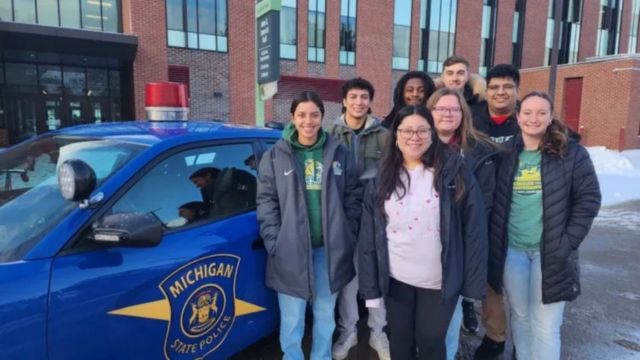
Students from four Michigan universities are working alongside Michigan State Police detectives to breathe new life into unsolved cases, digitizing mountains of evidence, organizing investigative files and, in some cases, uncovering new leads.
The program, first launched in 2020 through partnerships with Western Michigan University and Michigan State University, has since expanded to include Grand Valley State University and Northern Michigan University.
For recent Western Michigan University graduate Madelyn Mill, the experience confirmed she had found her career path.
“We digitized documents, transcribed notes, made timelines and anything else needed to assist investigators,” Mill said.
Mill, who recently graduated from WMU, is now an MSP cadet and is expected to begin the 152nd Trooper Recruit School on July 5.
“I was interested in law enforcement but wasn’t sure what my path looked like,” she said. “A friend in the Cold Case Program at WMU encouraged me to get involved, which solidified that the MSP was the place for me.”
Trooper Kasey Carroll followed a similar path. After participating in the cold case program while attending Western Michigan University, Carroll is now assigned to the MSP Paw Paw Post.
“In the Cold Case Program we were immersed in case work, and it helped me understand I love working with victims through the course of an investigation,” Carroll said. “This experience changed my career trajectory.”
Students participating in the programs assist detectives by digitizing paper files, organizing evidence, creating investigative timelines and conducting research that allows detectives to focus on active investigative work.
According to Detective Sgt. Larry Rothman, who oversees the First District Cold Case Unit’s partnership with Michigan State University, the students have become an invaluable resource.
“These students are a force multiplier,” Rothman said. “Not only are they an extra set of eyes, but the time they free up for detectives is invaluable. We are truly collaborating on leads they generate. That’s direct job training most can’t access before becoming employed.”
The program has already produced measurable results.
Most recently, investigative work contributed to the successful prosecution of a Saginaw man who was sentenced in connection with the 2003 sexual assault and murder of Jeanette Wilton.
While each university structures the coursework differently, students commit to at least two semesters and earn academic credit through classroom and laboratory work. Limited paid leadership positions are also available for students who continue with the program.
The initiative has also become a pipeline for future state troopers.
Michigan State Police estimates that 12 current troopers first participated in one of the university cold case programs, while at least seven additional former students, including Mill, are scheduled to attend upcoming recruit schools.
Trooper Evan Durbin, a graduate of Northern Michigan University’s program who is now assigned to the MSP Negaunee Post, said the experience provided practical investigative skills that continue to benefit him.
“After organizing and analyzing case files, I helped create an animated presentation showing what we believe happened ballistically at the scene of a nearly 20-year-old unsolved homicide,” Durbin said. “The work we did came down to attention to detail. It directly applies to my job now and has helped prepare me for what could come next in my career.”
For Michigan State Police, the collaboration is proving to be a win for both detectives and students — helping move cold cases forward while giving aspiring law enforcement officers hands-on investigative experience long before they pin on a badge.