
By Jennifer Johnson, fisheries biologist and Marcee Wardell, communications specialist Fisheries Division Michigan Department of Natural Resources
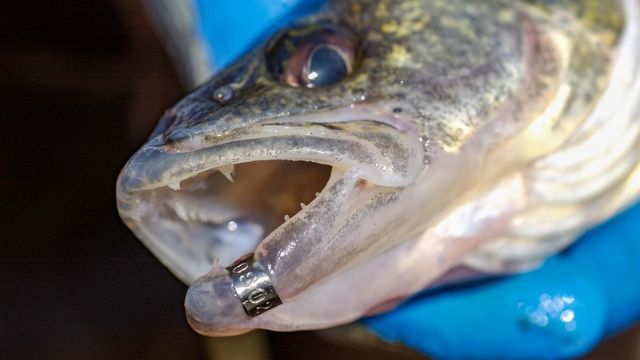
Walleye account for nearly 80% of the fish stocked in the southwestern Upper Peninsula. But how much stocking contributes to the fishery varies from lake to lake. A Michigan Department of Natural Resources pilot project used DNA to find out where hatchery-raised fish are surviving and where natural reproduction is sustaining populations.
The project, conducted in 2025 and 2026 with funding from the Wilderness Shores Mitigation and Enhancement Fund, tested a method called parentage-based tagging. It works by comparing DNA from fish caught during surveys with DNA from the adult walleye used to produce fish for stocking.
DNR crews collected small fin clips from adult walleye at Little Bay de Noc. The samples went to Jared Homola’s lab at Michigan State University, where researchers built a genetic record of the parent fish. Their offspring were raised in the hatchery system. Some were stocked shortly after hatching, while others grew to about 1½ inches in rearing ponds before being released.
During nighttime electrofishing surveys in the fall, crews collected fin clips from young walleye and verified their ages. The lab compared the samples with those from the hatchery parents to identify stocked fish.
The genetic method lets crews sample fish without killing them and reduces the workload at the hatchery. The previous method used oxytetracycline, an antibiotic that leaves a mark on a fish’s otolith, or ear stone. The six-hour treatment required hatchery staff to monitor water conditions and keep treated fish in separate tanks. Biologists had to kill the fish to examine the otolith, and marks could be difficult to detect.
Results from three Iron County lakes showed how much the contribution of stocked fish can vary.
At Lake Emily, 96% of the walleye sampled in their first two years of life came from stocking, indicating that hatchery fish are contributing to the lake’s population.
At Hagerman Lake, only 1.7% of the walleye tested were linked to the Bay de Noc hatchery strain. The remaining 98.3% were related to Lake Gogebic walleye stocked in the 1980s. Descendants of those earlier releases established a naturally reproducing population, even as the lake continued to receive Bay de Noc fish in later years.
At Ottawa Lake, 94% of the walleye sampled were naturally produced. The fish still showed some genetic similarities to the Lake Gogebic strain stocked there in the 1980s, but researchers found signs the population was becoming genetically distinct.
Crews caught only a few walleye in some lakes, where woody debris, aquatic vegetation or steep drop-offs can make surveys difficult. More fieldwork will help biologists determine whether those small catches reflect lake conditions or low numbers of young fish. Future surveys can also use DNA to see whether stocked fish survive to adulthood.
The DNR plans to use parentage-based tagging statewide to evaluate walleye stocking and may eventually use it for other species. The results will help biologists decide where stocking should continue and where natural reproduction can sustain the fishery. In lakes where few hatchery fish survive, the agency could direct limited stocking resources to waters where those fish make a greater contribution.