
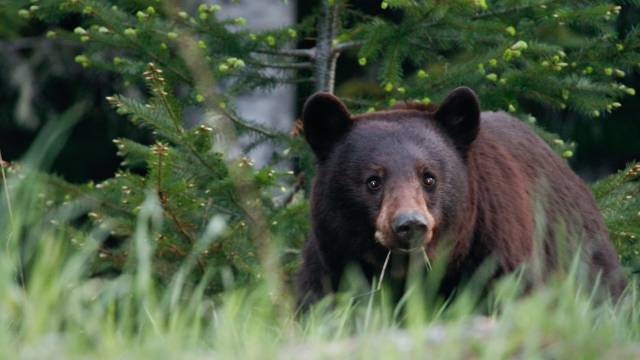
Michigan’s 2026 bear hunting season is underway in the Upper Peninsula, with thousands of hunters expected to head out this fall.
The Michigan Department of Natural Resources is issuing 6,278 licenses across the state’s 10 bear management units. More than 72,500 people applied for either a license or preference point this year.
Licenses are awarded through an annual drawing based on accumulated preference points. The number required varies by management unit and hunting period. Licenses are generally easier to obtain in the Upper Peninsula because of its higher bear population.
Season dates
The Amasa, Baraga, Bergland, Carney, Gwinn and Newberry units have three hunting periods:
Period 1: Sept. 9 through Oct. 21
Period 2: Sept. 14 through Oct. 26
Period 3: Sept. 25 through Oct. 26
Drummond Island’s season runs Sept. 9 through Oct. 21.
In the northern Lower Peninsula, the Baldwin, Gladwin and Red Oak units are open Sept. 12-22, followed by an archery-only period Oct. 2-8.
Baiting and hounds
In the U.P., bait may be used Sept. 9 through Oct. 26, while dogs may be used Sept. 14 through Oct. 26.
Hunters using hounds are limited to eight dogs per pack. All dogs must be licensed, immunized and have identification attached to their collars.
Bait containers are prohibited on public and Commercial Forest lands. Natural materials, including downed trees, hollow stumps, rocks and soil, may be used to contain bait. Containers such as barrels are permitted only on private land and must meet state opening-size requirements.
Safety and registration
Firearm hunters must wear hunter orange as their outermost garment, visible from all sides. Camouflage clothing must be at least 50% hunter orange. Archery hunters are exempt, although orange clothing is encouraged.
Within 72 hours of harvesting a bear, hunters must bring the unfrozen head and hide—or the entire animal—to an official registration station for sealing.
Michigan hunters harvested 1,960 black bears in 2025, including 1,528 in the U.P. and 432 in the Lower Peninsula.
State law requires hunters to salvage the edible portions of a bear, including the front and hind quarters, loins and tenderloins, unless the meat is damaged, spoiled, diseased or otherwise unfit for consumption.
Because black bears can carry the parasite that causes trichinosis, all whole cuts and ground bear meat should be cooked to an internal temperature of 160 degrees. Hunters should use a meat thermometer and thoroughly clean their hands, equipment and work surfaces after handling raw meat.
Complete regulations and updated registration locations are available in the 2026 Michigan Bear Hunting Regulations Summary.